
Tip & Trick
Did you know your keyboard hides powerful symbols starting with 'A' that can boost productivity, unlock hidden features, and simplify workflows? These 10 underrated keyboard symbols—often overlooked—can transform how you work across Windows, macOS, and web applications.
Alt Key for Menu Access
Stuck in a legacy application where right-click menus refuse to cooperate? The Alt key is your secret weapon for accessing hidden menus—especially in older Windows programs that rely on keyboard shortcuts instead of modern UI elements.
Pressing Alt alone often reveals a cryptic but functional menu bar (like "File," "Edit," or "View") at the top of your screen. Combine it with letters (e.g., Alt+F for File) to navigate without a mouse. This trick works in DOS-based tools, outdated software, or even troubleshooting modes where GUI elements fail. For example, Alt+Tab toggles between open windows—a lifesaver when your taskbar is frozen.
IT admins, retro gamers, and anyone dealing with legacy systems will appreciate this no-frills solution. It’s the digital equivalent of a Swiss Army knife for outdated tech. ⚡
At Symbol (@) for Email
The @ symbol isn’t just for email—it’s the foundation of digital identity. Whether you’re typing a username or writing code, this symbol bridges communication and programming, making it one of the most versatile symbols on your keyboard.
On most keyboards, you’ll find it by pressing Shift + 2 (U.S. layout). In programming, it’s used for variable declarations in Python (@property) or decorators in JavaScript, while social media handles like @microsoft rely on it for tagging. Typing it quickly is key—try memorizing the Shift + 2 shortcut to save time when composing emails or writing code.
Developers and social media managers will appreciate its dual role, but even casual users benefit from knowing this shortcut for faster typing. Mastering it means smoother workflows in both digital communication and coding. ✨
Angle Brackets (<< >>) for Coding
Ever wondered why `
` or <<vector>> look like they’re wrapped in bookends? Those angle brackets are the unsung heroes of coding syntax, defining everything from HTML tags to C++ templates and XML structures.
In HTML, they enclose tags like `
` or <a href="...">, while in C++, they declare generic types (vector<int>). XML uses them for elements (<book>), and even Java leverages them for angle-bracket notation in generics. Typing them correctly ensures your code compiles—and looks professional. ⚡
Ampersand (&) for Shortcuts
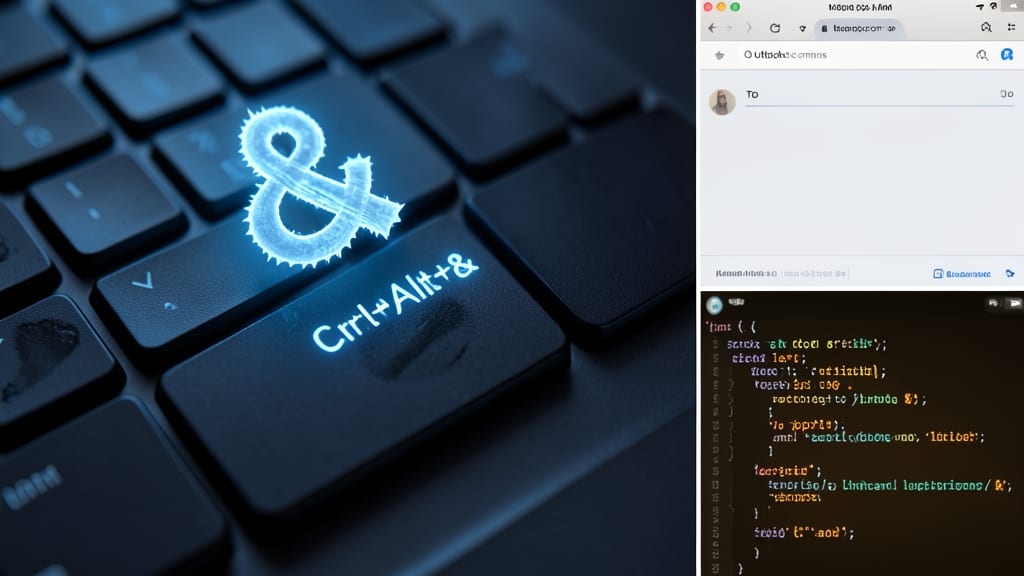
Ever wondered why Outlook’s Ctrl+Alt+& shortcut feels like magic? The humble ampersand (&) isn’t just for sloppy typography—it’s a powerhouse in shortcuts, scripting, and logical operations you’ve likely overlooked.
In Outlook, pressing Ctrl+Alt+& toggles the “To” field in new emails, while in batch files, & chains commands together (e.g., dir & pause). On the command line, it separates arguments or enables logical AND operations in scripts. Developers also use it in HTML for grouping form elements or in regex for alternation patterns.
Perfect for power users juggling emails, scripts, or web dev—master this symbol to streamline workflows and avoid repetitive clicks. ✨
Arrows (← → ↑ ↓) for Navigation
Think of the arrow keys as your secret weapon for precision navigation—far beyond just moving the cursor. These four symbols unlock word-by-word editing, pixel-perfect adjustments in design tools, and even gamepad-like controls in productivity apps like Excel or Photoshop.
Press Ctrl+Left/Right Arrow to jump between words (or even paragraphs with Ctrl+Shift+Arrow), while Alt+Arrow lets you snap UI elements into perfect alignment. In Photoshop, Shift+Arrow resizes selections without distortion, and Spacebar+Arrow lets you nudge layers with sub-pixel accuracy. The Num Lock + Arrow combo even mimics a joystick for smooth scrolling.
Perfect for designers, coders, and power users who crave faster workflows—these shortcuts turn repetitive tasks into one-handed operations. Master them, and you’ll wonder how you ever lived without them. ✨
Asterisk (*) for Wildcards
The asterisk (*) isn’t just a decorative symbol—it’s a productivity powerhouse for matching patterns, automating tasks, and crunching numbers. Whether you’re sorting files, writing code, or analyzing data, this wildcard does heavy lifting with minimal effort.
In Excel, =SUM(A1:A10) becomes =SUM(A1:A) to include all adjacent cells. In command prompts, dir .txt instantly filters text files, while in Python loops, for file in glob.glob(".pdf"): streamlines file processing. Even in math, denotes multiplication—critical for formulas and scientific notation.
Developers and data analysts will love its regex flexibility, but even casual users can save time with file searches. Master this symbol, and you’ll turn repetitive tasks into one-liners. ✨
Accent Grave (`) for Programming
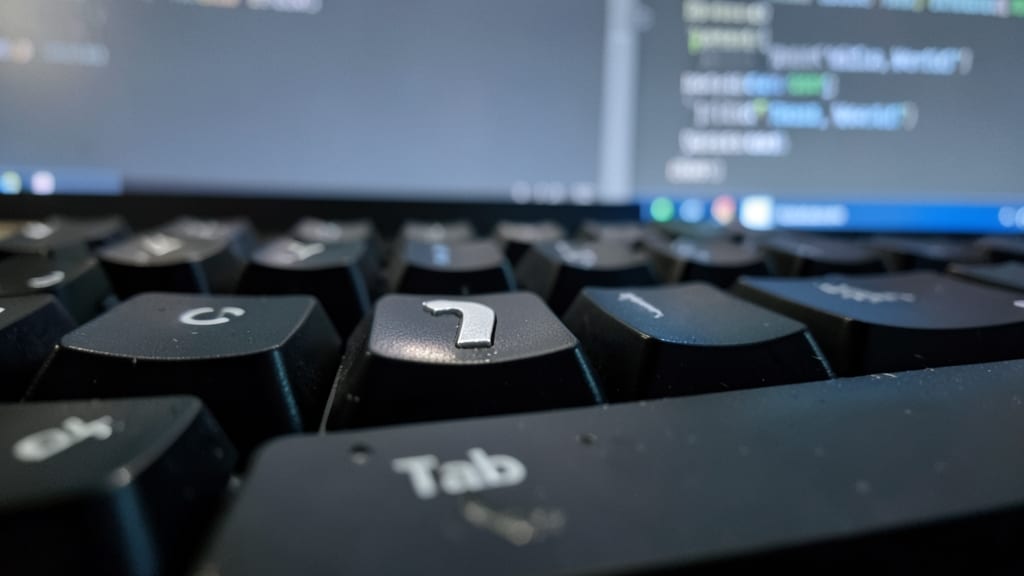
Tucked next to your Tab key lies the accent grave (`), a humble symbol with superpowers in programming. It’s the secret ingredient for shell commands, Python f-strings, and even creating backticks in Markdown—making it indispensable for developers and sysadmins alike.
In Linux terminals, it’s the prefix for command substitution (` ls `), while Python uses it for f-strings like f"Hello {name}". Markdown converts it to backticks for code blocks, and it escapes special characters in regex. Typing it is easy: press Shift + ` (left of "1" on most keyboards).
If you work with scripts, documentation, or command-line tools, mastering this symbol will streamline your workflow—no more digging through menus for hidden formatting. ⚡
Section Symbol (§) for Legal Docs

Drafting legal documents or academic papers? The section symbol (§) is your secret weapon for organizing structured content—think clauses in contracts, numbered sections in research papers, or even footnotes in formal writing.
In Microsoft Word, type 0150 on the numeric keypad while holding Alt, then release. For LaTeX, use \S or \S (with the textcomp package) to render it cleanly. Unicode users can copy-paste § (U+00A7) directly. This symbol isn’t just for lawyers—it’s also used in ISO standards and technical manuals to denote specific sections.
Perfect for professionals in law, academia, or technical writing who need precise formatting. Mastering this symbol ensures your documents meet industry standards without manual formatting headaches. ✨
Alpha Symbol (α) for Math
Stuck writing equations for your next research paper or engineering project? The Greek letter alpha (α) isn’t just for math textbooks—it’s a cornerstone of scientific notation, physics formulas, and statistical analysis. Whether you’re defining variables in calculus or annotating confidence intervals in data science, α is your go-to symbol for precision.
Typing it is easier than you think: in LaTeX, just type \alpha between dollar signs ($α$ or $\alpha$). Microsoft Word’s Equation Editor lets you insert it via the Greek Letters tab, while Windows users can use Alt+8734 (NumPad) for a quick shortcut. For coders, α appears in machine learning libraries (like TensorFlow’s alpha parameter in optimizers) and quantum computing notation.
Perfect for engineers, data scientists, and academics—this symbol bridges theory and practical application, whether you’re debugging an algorithm or publishing a peer-reviewed paper. ✨
Apostrophe (’) for Punctuation
The apostrophe (’) isn’t just for contractions like "don’t" or "can’t"—it’s a multipurpose punctuation powerhouse that bridges writing and programming. In text, it handles possessives ("John’s laptop"), footnotes, and even abbreviations like "U.S.A."—while in code, it’s the key to defining Python dictionary keys or escaping special characters.
Typing it is simple: press Shift + ' on most keyboards (or Option + ' on Mac). But its real magic lies in contextual flexibility—whether you’re formatting citations in Word, debugging a script, or crafting a tweet. Developers love it for JSON key-value pairs (e.g., "name": "Alice"), while writers rely on it for clarity in possessive nouns.
This tiny symbol proves that punctuation isn’t just about grammar—it’s a versatile tool for precision in both prose and code. 💻