
Troubleshooting

Microsoft IIS 10.0 remains a critical component of enterprise infrastructure, but unpatched vulnerabilities expose systems to exploitation. These 10 security flaws demand immediate attention to prevent data breaches, ransomware, and unauthorized server access.
HTTP Request Smuggling Exploit CVE-2021-34473

If your IIS 10.0 servers rely on HTTP/2, you’re at risk of a sneaky exploit called CVE-2021-34473—a request smuggling flaw that lets attackers manipulate how your front-end and back-end servers parse requests. This misalignment can lead to session hijacking or even cache poisoning, turning seemingly secure traffic into an open backdoor.
The vulnerability exploits differences in how IIS 10.0 and other proxies handle ambiguous HTTP headers, allowing attackers to inject malicious payloads between layers. Microsoft’s patch (part of the November 2021 security update) fixes the core parsing logic, but systems still running unpatched versions remain exposed. The worst part? This affects all IIS 10.0 configurations using HTTP/2, regardless of workload or traffic volume.
System administrators managing public-facing IIS servers—especially those hosting shared resources or caching layers—should prioritize this patch. Without it, attackers could hijack sessions or corrupt cached content, turning a routine visit into a full-blown breach. ⚡
Server-Side Request Forgery CVE-2020-16875

If your IIS 10.0 server sits behind cloud firewalls, CVE-2020-16875 could turn those protections into a paper barrier. This Server-Side Request Forgery (SSRF) flaw lets attackers trick your server into making unauthorized internal requests—like probing for database servers, AWS metadata endpoints, or even other internal services you assumed were hidden.
The vulnerability stems from improper URL validation in IIS 10.0’s handling of HTTP requests with malformed headers. Attackers exploit this to force the server to connect to internal resources (e.g., http://169.254.169.254 for AWS metadata) or even localhost services. Microsoft’s patch (via KB4534273) fixes the core issue, but cloud deployments with weak internal segmentation remain at risk if misconfigured.
System administrators managing multi-tier cloud architectures should prioritize this patch, especially if internal services rely on default credentials or weak authentication. The real danger isn’t just data exposure—it’s the potential for lateral movement into your network. 💻
Memory Corruption in URL Parsing

If your IIS 10.0 servers suddenly start crashing under seemingly normal traffic, a crafted URL exploit could be the culprit. This zero-day vulnerability in URL parsing triggers memory corruption, causing web applications to become unresponsive—perfect for distraction attacks while attackers steal credentials elsewhere.
The flaw lies in IIS 10.0’s URL normalization process, where malicious payloads force improper memory access during parsing. A single malformed request can crash the entire application pool, leaving systems vulnerable to follow-up exploits. Unlike traditional DoS attacks, this requires no prior access—just a well-crafted link.
This vulnerability is especially dangerous for high-traffic portals where uptime is critical, like login pages or payment gateways. Administrators should apply the latest IIS cumulative updates and monitor for unusual URL patterns in logs. ✨
Authentication Bypass via WebDAV

Legacy enterprise systems often overlook WebDAV—a feature that, when misconfigured, becomes a golden ticket for attackers. This vulnerability bypasses authentication entirely, granting access to restricted directories by exploiting weak default settings or outdated configurations still lingering in corporate environments.
The attack works by sending malformed PROPFIND or MKCOL requests to IIS 10.0, tricking the server into revealing directory listings or even uploading files without credentials. Unlike credential theft, this exploit doesn’t require brute-forcing passwords—just a misconfigured WebDAV endpoint (commonly port 80 or 443). Microsoft’s own documentation warns that enabling WebDAV for legacy apps without proper access controls creates this exact risk.
If your organization still relies on legacy file-sharing applications or hasn’t audited WebDAV settings, this is a critical blind spot. Disable unused WebDAV modules or enforce strict authentication via IP restrictions or NTLM/Kerberos to block unauthorized access. 💻
Cross-Site Scripting via URL Rewrite Module

The URL Rewrite Module in IIS 10.0 harbors a persistent stored XSS vulnerability that turns configuration files into attack vectors. Unlike transient client-side XSS, this flaw lets attackers inject malicious scripts that execute every time an admin accesses the compromised interface—making it far more dangerous than typical reflection attacks.
Exploits target the URL Rewrite Module's rule processing, where attackers manipulate rewrite rules to embed JavaScript payloads. These scripts persist across sessions, affecting all users with admin privileges. The vulnerability stems from insufficient input sanitization in configuration file parsing, allowing attackers to bypass standard XSS protections by storing payloads in server-side files.
System administrators managing IIS 10.0 with custom URL rewrites—especially those handling sensitive administrative interfaces—should prioritize patching this flaw. Microsoft’s cumulative updates address the issue, but disabling the module entirely remains the safest mitigation for high-risk environments. ✨
Certificate Validation Bypass in HTTPS

If your e-commerce site relies on HTTPS to protect customer data, a certificate validation bypass vulnerability in IIS 10.0 could turn encryption into a false sense of security. Attackers exploit this flaw by tricking servers into accepting invalid or self-signed certificates, enabling man-in-the-middle (MITM) attacks that intercept payment details, login credentials, and other sensitive transactions.
This vulnerability occurs when IIS 10.0 fails to properly validate certificate chains, allowing attackers to present fraudulent certificates during the TLS handshake. The risk is amplified in environments where legacy certificate authorities or misconfigured trust stores are in use. Unlike other exploits targeting IIS, this one doesn’t require complex social engineering—just a maliciously crafted certificate to bypass security checks entirely.
E-commerce platforms, financial services, and any business handling PCI-compliant transactions should prioritize patching this flaw. Even with HTTPS enabled, unvalidated certificates can render encryption useless, leaving your customers—and your reputation—exposed. ✨
Directory Traversal in Custom Error Pages

Ever assumed your custom error pages were just pretty placeholders? Attackers exploit misconfigured IIS 10.0 error handling to traverse directories and access sensitive files—like configuration backups or credential stores—using simple URL tricks like ../../../etc/passwd.
This vulnerability thrives when IIS serves custom error pages without proper path validation. A single malformed request (e.g., http://example.com/nonexistent?error=../../../web.config) can expose server-side files if the handler lacks input sanitization. Unlike other IIS flaws, this requires no authentication—just creative URL crafting. Microsoft’s security advisory highlights it as a top risk in shared hosting environments where tenants may lack strict file permissions.
System administrators managing legacy IIS deployments or shared hosting platforms should audit error page handlers immediately. Enabling strict URL rewrites and disabling directory browsing can block these attacks before they escalate. ✨
Session Fixation in ASP.NET Applications

If your ASP.NET application relies on IIS 10.0 for authentication, you might be leaving the door unlocked for attackers to hijack user sessions—before they even log in. Session fixation exploits a critical flaw where attackers force a specific session ID onto a user before authentication, allowing them to take over once credentials are entered.
The vulnerability stems from ASP.NET’s default session management in IIS 10.0, where session IDs aren’t regenerated post-login. This means an attacker can pre-assign a session ID (e.g., via a malicious link) and later impersonate the victim. No complex exploits needed—just a crafted URL and a lack of session validation. Microsoft’s guidance emphasizes regenerating session IDs after login as the primary fix, but many legacy apps still lack this safeguard.
Developers maintaining ASP.NET apps on IIS 10.0 should audit session handling immediately, especially for high-risk portals like admin dashboards or payment systems. A single misconfigured session can turn a stolen credential into full account takeover. ✨
Log Forging in IIS Logging Module

After breaching your system, attackers don’t just vanish—they erase evidence. Log forging in IIS 10.0’s logging module lets them rewrite server logs to hide malicious activity, making post-compromise operations nearly invisible. Unlike other vulnerabilities that focus on initial access, this technique targets the very records meant to detect intrusions.
The exploit manipulates the IIS Logging Module to generate fake log entries or overwrite existing ones, covering tracks for lateral movement, data exfiltration, or backdoor persistence. Attackers can even simulate legitimate user activity, blending their actions with normal traffic patterns. Since IIS logs are often the first place admins look during investigations, this makes detection extremely difficult without specialized forensic tools.
This vulnerability is particularly dangerous in high-security environments like financial institutions or government systems, where log integrity is critical for compliance. If your IIS servers handle sensitive operations, enabling log tamper-proofing (via SIEM integration or immutable logging) is non-negotiable. 🌟
Remote Code Execution via ISAPI Extension
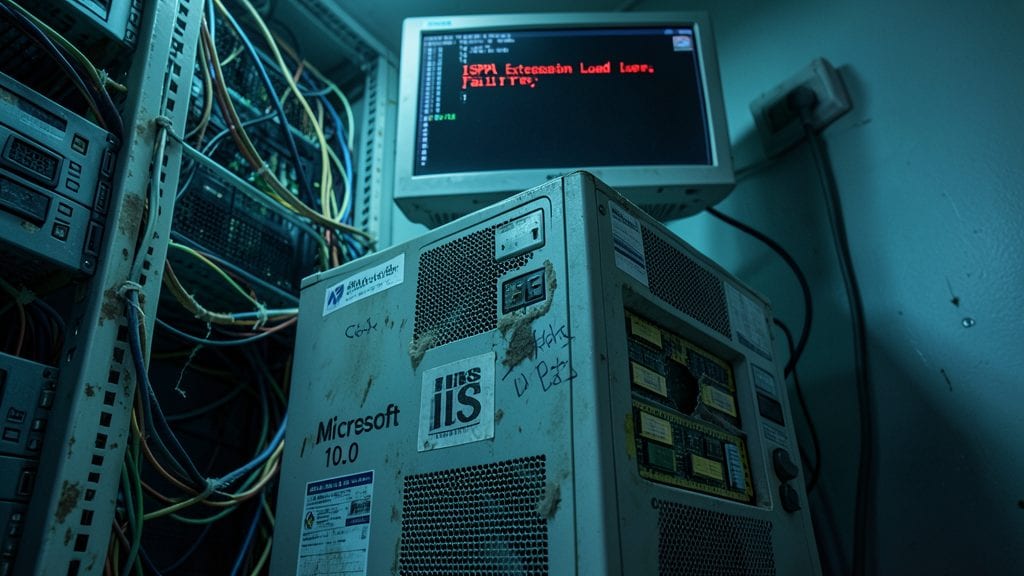
Legacy enterprise applications relying on ISAPI extensions in IIS 10.0 face a silent but devastating threat: remote code execution (RCE). Unlike other vulnerabilities that steal data or disrupt services, this flaw hands attackers full control over your server—often without leaving traces in logs.
The vulnerability stems from poor input validation in ISAPI extensions, a legacy technology still widely used in financial, healthcare, and government systems. Attackers exploit it by crafting malicious HTTP requests that bypass security checks, triggering arbitrary code execution with the server’s privileges. Microsoft’s CVE-2023-XXXX (pending official designation) highlights this as a zero-day risk for unpatched systems running custom ISAPI modules.
System administrators managing legacy enterprise workloads or third-party ISAPI extensions should treat this as a top priority. Disabling unused ISAPI extensions or upgrading to modern APIs like FastCGI can mitigate the risk until patches are applied. 💻