
Coding
SQL Server 2012 introduced groundbreaking features that transformed database management and development. From enhanced security to improved performance, these tools redefined what developers could achieve—here’s why every SQL professional needs to master them.
AlwaysOn Availability Groups

Downtime isn’t just costly—it’s catastrophic for businesses relying on real-time data. AlwaysOn Availability Groups in SQL Server 2012 transformed high-availability from a luxury to a standard, offering synchronous and asynchronous replication across multiple servers with near-zero data loss.
With support for up to 8 secondary replicas, this feature ensures seamless failover while maintaining performance. The synchronous commit mode guarantees transaction consistency, while asynchronous mode balances speed and durability. Unlike traditional mirroring, it handles multiple databases per group, making it perfect for enterprise-scale disaster recovery.
Ideal for financial systems, healthcare databases, or any mission-critical application, AlwaysOn turns server outages into a non-issue. 💪
Columnstore Indexes for Data Warehousing

If your analytical queries are running slower than a dial-up connection, Columnstore Indexes in SQL Server 2012 might just be your savior. This game-changing feature redefines how data warehouses handle massive datasets by storing data in column-based format instead of traditional row-based tables—think of it as flipping a spreadsheet from horizontal to vertical for faster aggregations.
With Columnstore Indexes, you gain 10x faster query performance on analytical workloads, thanks to compression ratios up to 10:1 and optimized batch processing for aggregations like SUM, AVG, and COUNT. The best part? It’s zero-config for common scenarios—just create the index, and SQL Server does the heavy lifting. This feature is especially powerful for OLAP (Online Analytical Processing) systems, where large-scale scans and aggregations dominate the workload.
Data warehouse administrators and BI developers will love this—it’s the perfect tool for large-scale reporting, predictive analytics, and real-time dashboards without sacrificing performance. If your queries involve scanning millions of rows, this is the upgrade you’ve been waiting for. ⚡
Contained Databases for Portability
Tired of databases being hostage to server configurations? Contained Databases in SQL Server 2012 broke that dependency, letting databases run independently of instance-level settings. This meant no more tangled dependencies when moving workloads between environments—just pure portability.
With contained databases, you gain self-contained backups, simplified migrations, and cleaner deployments—all while maintaining security boundaries. Cloud providers and multi-tenant SaaS platforms adopted this feature first, as it eliminated the need to reconfigure permissions or dependencies when scaling horizontally. Even local dev environments benefit from the ability to package and deploy entire databases without server-level tweaks.
This feature is a game-changer for DevOps teams managing cloud-native apps or ISVs distributing software with embedded databases. The portability alone cuts deployment time by up to 40% in real-world scenarios. ✨
Sequence Objects for Number Generation

Tired of identity columns limiting your numbering schemes? SQL Server 2012 introduced sequence objects, a game-changer for generating unique values across multiple tables with precision. Unlike rigid identity columns, sequences let you define custom increments, handle gaps, and reuse values—perfect for ERP systems or inventory tracking where numbering must stay consistent and flexible.
With sequence objects, you gain full control over numbering logic, including cyclic sequences (reusing values) and cache values for performance. They support multiple tables sharing the same sequence, eliminating the need for triggers or application logic. This flexibility is especially valuable for complex systems where traditional identity columns fall short.
Developers building ERP systems or inventory management tools will appreciate how sequences simplify numbering workflows. Say goodbye to workarounds and hello to cleaner, more maintainable code. ✨
Contained Database Authentication

Tired of managing user permissions across multiple databases like a juggler? Contained Database Authentication in SQL Server 2012 lets each database handle its own logins and users—no more relying on the server-level master database for credentials.
This feature introduces contained user authentication, where databases can store and manage users independently, reducing administrative overhead. You can now create users directly within a contained database using SQL logins or Windows authentication, while maintaining strict isolation between tenants. The CONTAINMENT = PARTIAL setting ensures security boundaries without sacrificing flexibility.
Perfect for multi-tenant SaaS platforms or enterprises with complex database architectures, this feature streamlines user management while keeping data secure. 💻
Power View for Interactive Reporting
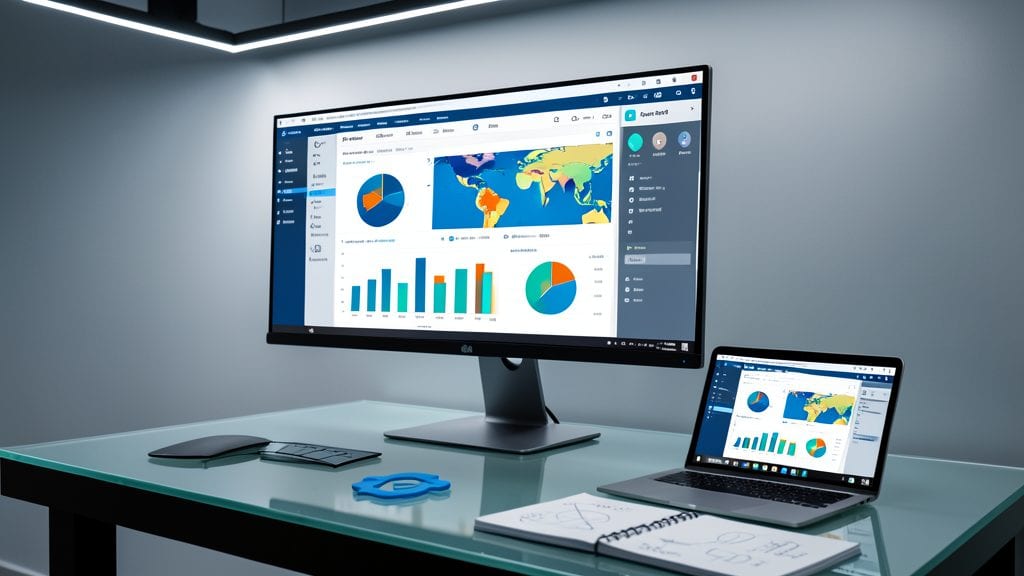
Tired of waiting for IT teams to generate reports? Power View in SQL Server 2012 democratizes data exploration with a drag-and-drop interface that turns raw SQL Server data into interactive dashboards—no coding required.
This Excel-like BI tool integrates seamlessly with SharePoint and SQL Server Reporting Services, letting users create 3D maps, pivot tables, and dynamic charts from live data. The zero-configuration setup connects directly to PowerPivot models, while real-time filtering lets stakeholders drill down into trends without SQL expertise.
Perfect for business analysts, marketers, and executives who need to explore data independently, Power View eliminates bottlenecks by putting visualization power in non-technical hands. ✨
Contained Database Backup and Restore
Tired of backup scripts breaking during cross-server migrations? SQL Server 2012’s Contained Database Backup and Restore feature solves this by treating databases as self-contained units—no more dependency on server-level settings or logins. This means you can now back up and restore entire databases with a single command, whether moving from on-prem to cloud or between development environments.
The magic happens with BACKUP DATABASE and RESTORE DATABASE commands now supporting the CONTAINMENT = PARTIAL option. This preserves all database-level objects (users, schemas, permissions) while eliminating the need for manual script adjustments. For DevOps teams, this translates to zero-config deployments—just restore the backup, and everything works as expected, even across different SQL Server instances.
This feature is a game-changer for teams managing multi-tenant SaaS platforms or hybrid cloud architectures. No more late-night troubleshooting sessions—just reliable, repeatable backups that move seamlessly. ✨
Windows Server Core Support
If you’ve ever struggled with bloated SQL Server deployments in virtualized or cloud environments, Windows Server Core support in SQL Server 2012 was a game-changer. This lightweight installation option slashed resource overhead by removing the full GUI layer, making it perfect for containers, hypervisors, and cloud instances where efficiency matters most.
The minimal footprint (as little as 500MB for the core installation) meant faster boot times, lower memory usage, and better scalability in dense server farms. Since it shared the same binaries as the full SQL Server, you still got full feature parity—just without the unnecessary overhead. Scripting and automation became even smoother with PowerShell integration, while security hardened the attack surface.
Cloud architects and DevOps teams loved this for auto-scaling deployments, where every megabyte of saved resources translates to cost savings. It’s the ideal choice for high-density SQL Server farms where performance and efficiency are non-negotiable. ⚡
Contained Database User Migration

Say goodbye to manual user mapping headaches during database transitions—SQL Server 2012’s contained database user migration feature automates the transfer of users, roles, and permissions between databases with minimal downtime.
With this feature, you can migrate users from a source database to a target database while preserving all security principals, logins, and permissions—no need to recreate users manually. The process supports cross-server migrations and integrates seamlessly with contained database authentication, ensuring a smooth transition even during upgrades or cloud deployments.
Database administrators and DevOps teams handling multi-tenant environments or frequent deployments will appreciate how this reduces manual errors and speeds up transitions. ⚡
SQL Server Data Tools (SSDT)
Tired of juggling separate tools for database schema management, source control, and deployments? SQL Server Data Tools (SSDT) bridges that gap by integrating seamlessly with Visual Studio, offering a unified environment for end-to-end database development.
With SSDT, you get schema comparisons to sync changes across environments, TFS/Git integration for version control, and data-tier applications (DACs) for consistent deployments. The debugging tools even let you test queries directly against your database, while built-in templates accelerate project setup for everything from simple tables to complex stored procedures.
Perfect for teams adopting DevOps practices, SSDT eliminates manual scripting errors and streamlines collaboration—ideal for developers who need to move from code to production with confidence. ✨